
Over 10 Million Families Now Benefiting from BISP — A Major Milestone in Pakistan’s Poverty Relief
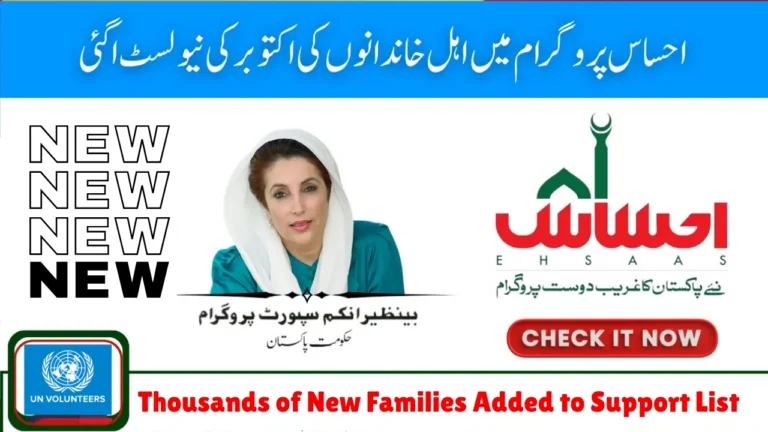
The Benazir Income Support Programme (BISP) has reached a historic milestone — over 10 million families across Pakistan are now receiving financial assistance through this life-changing initiative. What began as a small welfare effort years ago has now grown into one of the largest social protection programs in South Asia, offering hope and stability to millions of low-income households.
This expansion marks a turning point in Pakistan’s ongoing fight against poverty, giving women, widows, and struggling families the financial support they need to survive and thrive.
A Landmark Achievement in Social Welfare
The success of BISP’s expansion to over 10 million families is more than just a number — it represents millions of lives transformed.
For countless households, these monthly stipends mean:
-
Mothers can buy food and essentials for their children.
-
Fathers can pay utility bills without taking loans.
-
Students can continue their education instead of working to support their families.
In an economy where inflation and living costs continue to rise, BISP has become a lifeline that helps Pakistan’s most vulnerable citizens survive hardship with dignity.
Why Expanding BISP Matters More Than Ever
The inclusion of 10 million families under the BISP umbrella highlights two critical realities:
-
Poverty remains a major national challenge.
-
The government is actively expanding its safety net to ensure no deserving family is left behind.
Here’s why this expansion is so significant:
- Wider Coverage: Millions of new households have been added to ensure financial inclusion across rural and urban areas.
- Focus on Women: Payments are made to female heads of households, empowering women to make financial decisions for their families.
- Reduced Inequality: The program directly targets low-income groups, narrowing the wealth gap.
- Social Stability: Families receiving consistent support are less likely to fall into debt or financial despair.
Key Features of BISP 2025
The 2025 updates to BISP have made the program more transparent, efficient, and impactful for the millions who depend on it.
1. Increased Cash Assistance
The cash stipend has been raised to help families combat inflation. Payments are made directly to women’s BISP accounts or through partner banks.
2. Education Support for Children
Children from beneficiary families receive school stipends under the Benazir Taleemi Wazaif scheme. Girls are given higher stipends to promote female education.
3. Nutrition and Health Aid
Families with young children receive additional nutrition support, ensuring access to healthy meals and basic medical care.
4. Digital Payment System
To prevent corruption and middlemen exploitation, BISP payments are now distributed through biometric verification, ATMs, and mobile wallets such as JazzCash and EasyPaisa.
5. Emergency Assistance
Families affected by natural disasters, floods, or economic shocks receive additional relief under special BISP allocations.
Who Can Benefit from BISP in 2025
While BISP has expanded to cover more than 10 million families, eligibility is strictly defined to ensure that only deserving households receive support.
Eligibility Criteria
-
Families with poverty scores below 32, as verified by the NSER (National Socio-Economic Registry).
-
Female heads of households with valid CNICs.
-
Widows, divorced women, and single mothers supporting dependents.
-
Families with school-going children enrolled in education programs.
-
Households impacted by natural disasters or extreme poverty.
This ensures that the funds go where they are needed most.
Also Read: Double BISP Payment 2025 Announced — Who Is Eligible and How Much You’ll Get
Required Documents for BISP Registration
If you’re not yet part of the program, here’s what you’ll need to apply:
-
Original CNIC of the female applicant.
-
B-Form or Child Registration Certificate (CRC) for children.
-
Proof of residence (utility bill or rental agreement).
-
School enrollment certificate (for child stipends).
-
Death certificate (for widows, if applicable).
-
Divorce certificate (for separated women, if applicable).
How to Apply for BISP 2025
The registration process is designed to be simple and transparent.
Step-by-Step Process
-
Visit your nearest BISP Tehsil Office.
-
Submit your CNIC and supporting documents.
-
Your poverty score will be verified through the NSER database.
-
Once approved, you’ll receive a confirmation message from 8171.
-
Payments will then be transferred directly to your BISP account or partner bank.
📌 Note: If you’re already registered, you do not need to reapply unless your household details have changed.
Impact of BISP on Pakistani Families
Reaching over 10 million families has brought tangible improvements in communities across Pakistan:
| Area of Impact | Positive Change |
|---|---|
| Child Education | More children stay in school instead of working. |
| Nutrition | Families can afford basic food and healthcare. |
| Women Empowerment | Direct cash transfers to women boost independence. |
| Poverty Reduction | Families avoid debt and build stability. |
| Social Harmony | Financial support reduces desperation and unrest. |
Growth of BISP Over the Years
The journey from a small-scale welfare initiative to a nationwide poverty relief network is remarkable.
| Year | Families Covered | Key Milestone |
|---|---|---|
| 2008 | 1 million | Initial launch with basic cash transfers. |
| 2013 | 4 million | Added education stipends for children. |
| 2018 | 5.7 million | Introduced biometric verification and digital payments. |
| 2022 | 8 million | Emergency assistance for flood-affected families. |
| 2025 | 10+ million | Expanded coverage with education, nutrition, and health support. |
This growth reflects both government commitment and public trust in BISP as a reliable, transparent welfare system.
Why BISP Remains a Lifeline for Millions
The Benazir Income Support Programme is not just a financial scheme — it’s a symbol of hope. It gives marginalized families a chance to live with dignity, send their children to school, and improve their quality of life.
By expanding coverage and improving transparency, the government is ensuring that no family is left behind in Pakistan’s journey toward economic stability and social justice.
Summary
Over 10 Million Families Now Benefiting from BISP
-
Over 10 million families now receive BISP assistance across Pakistan.
-
Program focuses on women-led households, education, and nutrition.
-
Payments are made through digital wallets and biometric systems.
-
Eligibility verified via NSER survey and CNIC check.
-
BISP remains a lifeline for low-income families fighting inflation and poverty.
BISP’s expansion to 10 million families marks a major step forward in Pakistan’s fight against poverty — offering hope, stability, and empowerment to millions of deserving citizens.
FAQs
Q1. How many families are now benefiting from BISP?
Over 10 million families across Pakistan are currently receiving financial assistance under BISP.
Q2. Who can apply for BISP?
Low-income families with a poverty score below 32 and a female head of household are eligible.
Q3. How can I apply for BISP?
Visit your nearest BISP Tehsil Office, submit your documents, and verify your poverty score through the NSER system.
Q4. What benefits does BISP offer?
Cash assistance, education stipends for children, nutrition support, and special aid for disaster-affected families.
Q5. How are payments made?
Through digital methods — including ATMs, JazzCash, EasyPaisa, and HBL Konnect — to ensure transparency and convenience.